Ceramic vs Carbon Tint: What's the Real Difference?
Ceramic and carbon window tint both look great, but they perform very differently in the heat. Here's the real difference in heat rejection, price, and longevity.
Key Takeaways
- Carbon film gives a deep matte-black look, blocks 99% of UV, and rejects meaningfully more heat than dyed film, without any signal interference.
- Ceramic film is spectrally selective it lets visible light through while specifically rejecting infrared, the part of sunlight you actually feel as heat.
- Independent film comparisons put carbon's infrared rejection around 40-60%, while quality ceramic films commonly reach 85-97%.
- Because ceramic targets infrared instead of just darkening the glass, a lighter, California-legal ceramic film can outperform a much darker carbon or dyed film for keeping a cabin cool.
- California caps front side windows at 70% VLT, so choosing the right film technology matters even more when you can't legally go dark.
Two Films, One Big Difference: How They Actually Work
Not all window tint fights heat the same way, and the difference shows up the moment you get back into a car that's been sitting in a parking lot all day. Sunlight carries three kinds of energy ultraviolet, visible light, and infrared and infrared is the one responsible for most of the radiant heat you actually feel on your skin. How a film handles that infrared band, not how dark it looks, is what separates a tint that merely looks good from one that actually keeps a cabin cool. Anyone comparing auto window tinting in California options should start with that distinction, because heat rejection technology matters far more in Central Valley summers than shade alone.
It's a distinction most people never think about until they compare two cars parked in the same lot on the same afternoon one noticeably cooler than the other despite similar-looking tint. That gap almost always comes down to film technology, not darkness, and it's exactly why "how dark is it" is the wrong first question to ask when choosing between carbon and ceramic.
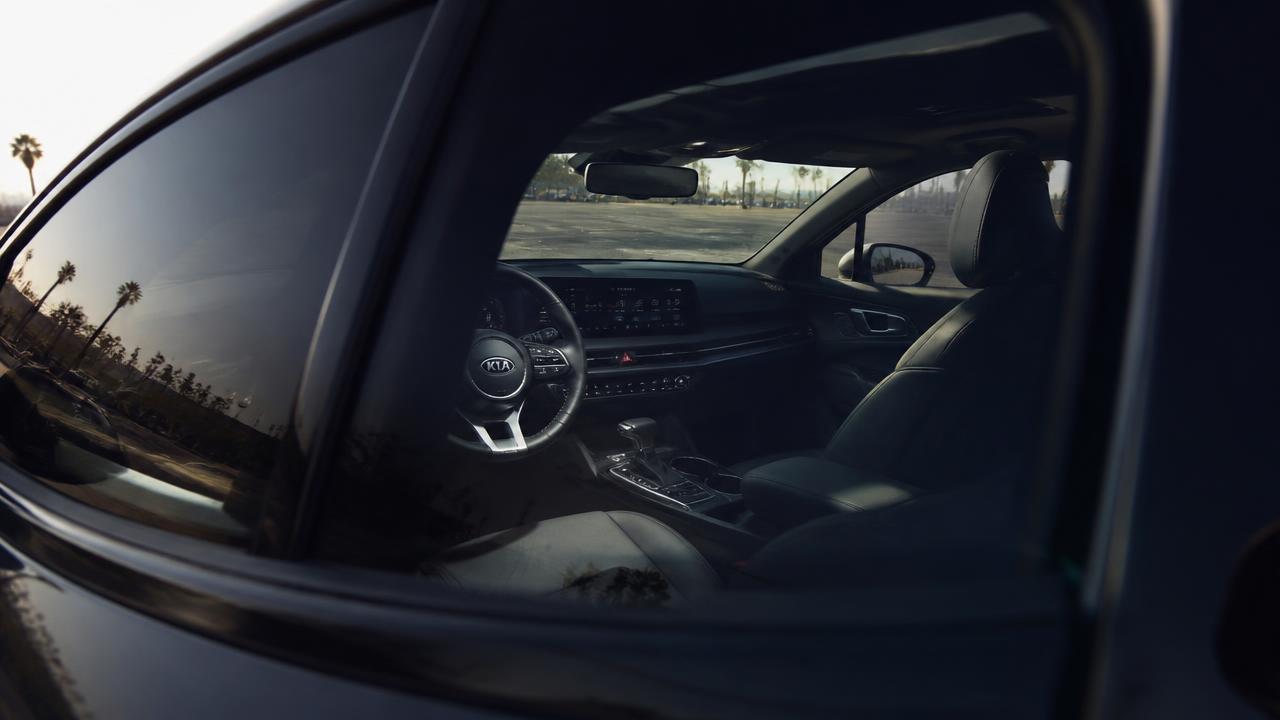
Carbon Film: The Value Choice for Daily Drivers
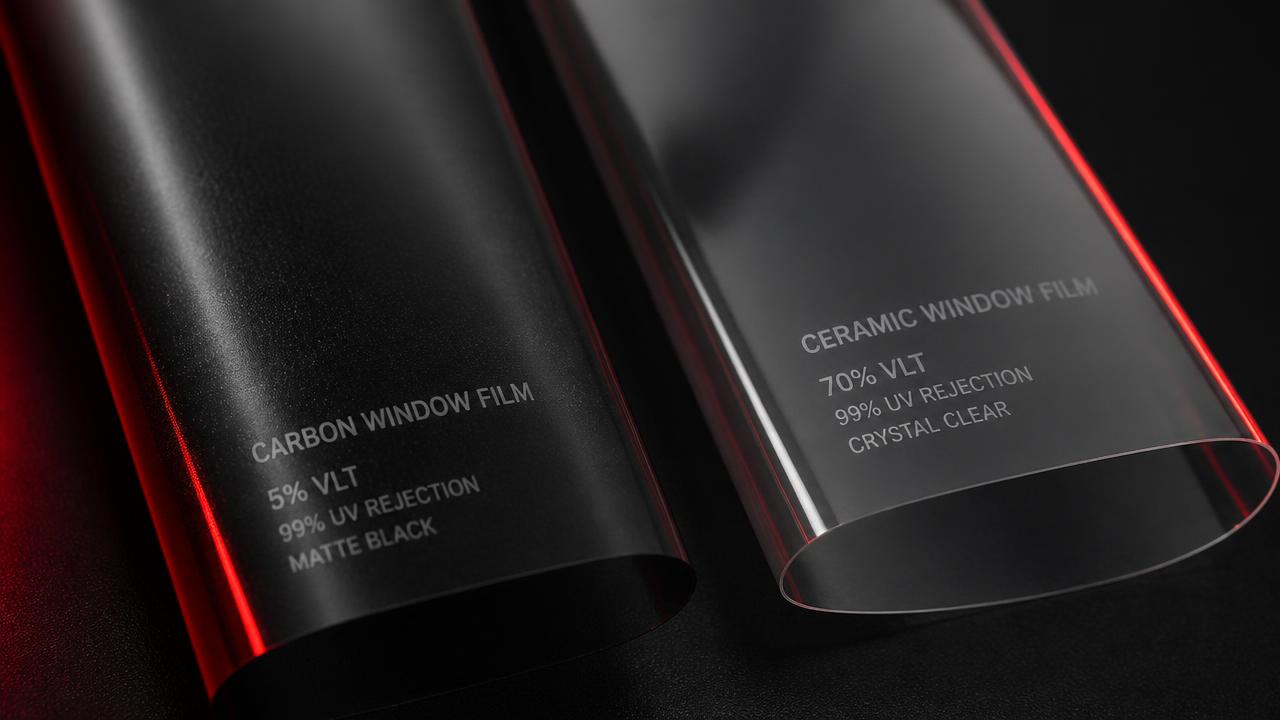
Carbon film gives a deep, matte-black look with zero signal interference and solid UV protection. It works by absorbing infrared energy rather than reflecting it, which is what gives carbon its rich, non-shiny appearance. It rejects meaningfully more heat than dyed film and holds its color over time instead of fading to the purplish tint older dyed films are known for, which makes it a dependable, budget-friendly option for a daily driver that spends most of its time in a garage or shaded parking.
The tradeoff is in the mechanism itself: because carbon film absorbs heat rather than reflecting it, some of that absorbed energy still radiates into the cabin over time, particularly during extended direct sun exposure. It's a real upgrade over dyed film, just not the ceiling of what modern tint technology can do.
For a lot of drivers, that's a perfectly reasonable tradeoff. If the vehicle spends most of its life in a garage, under a carport, or parked in shaded lots at work, carbon's absorption-based approach rarely becomes noticeable. The picture changes fast for anyone parking on open asphalt through a full Central Valley summer, which is exactly where the next film technology starts to pull ahead.
Ceramic Film: Spectrally Selective Heat Rejection
Ceramic is spectrally selective, meaning it's engineered to let visible light through while specifically rejecting infrared the exact band of sunlight you feel as heat. That distinction is what allows a lighter ceramic shade to keep a cabin dramatically cooler than a much darker film built on older technology, and it's why 99% UV protection shows up in both film types while real-world comfort can be worlds apart.
| Film Type | Typical Infrared Rejection | Signal Interference | Fade Resistance |
|---|---|---|---|
| Dyed film | 20–30% | None | Fades to purple over a few years |
| Carbon film | 40–60% | None | Holds color well, minimal fading |
| Ceramic film | 85–97% | None (fully non-metallic) | Excellent, resists fading long-term |
Independent film-performance comparisons back up why this gap matters so much in practice. According to published TSER and infrared-rejection data across major film brands, a 70% VLT ceramic film can reject more total solar energy than a much darker dyed film at 20% VLT proof that heat rejection comes from the film's technology, not how dark it looks from outside the car.
That single data point undercuts a lot of the guesswork people bring into a tint shop. Walking in and asking for “the darkest legal tint” is a reasonable instinct, but it's optimizing for the wrong variable. Asking about infrared rejection and TSER instead is what actually predicts how much cooler the cabin will feel on a 105°F Central Valley afternoon.
Why This Matters More in California Than Other States
California's tint law makes film technology even more important, because you can't simply go darker to compensate for a weaker film. Under California Vehicle Code Section 26708, front side windows must allow at least 70% VLT, and rear windows can be any darkness. That 70% front-window ceiling means a light, California-legal ceramic film is often the only realistic way to get serious heat rejection on the windows you sit right behind, since the law leaves little room to make up for a weaker film with extra darkness.
| Window | California Legal Limit |
|---|---|
| Windshield | Tint allowed only on top 4–5 inches, non-reflective |
| Front side windows | Must allow at least 70% VLT |
| Back side windows | Any darkness permitted |
| Rear windshield | Any darkness permitted (dual mirrors required) |
Which One Should You Pick?
If your priority is looks and budget, carbon does the job it looks sharp, blocks UV, and holds up well for typical daily driving. If you sit in Central Valley summer traffic, park outside all day, or haul kids and pets who feel every extra degree in the back seat, ceramic is worth the difference every single drive. The team at Darkside Window Tinting walks through your vehicle, your parking situation, and your budget before recommending a film, so you're not guessing between infrared-rejection numbers on a spec sheet.
There's no universally “right” answer here just the right answer for how a specific vehicle actually gets used. A weekend car that lives in a garage has very different needs than a commuter that bakes in an open lot five days a week, and matching the film to that reality is what actually determines whether the investment pays off in comfort.
Ready for a quote?
Tell us about your vehicle, home, or building and we will recommend the right film.
Get a Free Quote