Is Your Window Tint Legal? What California and Every Other State Actually Require
Tint law comes down to one number: VLT. Here's what California actually requires, how it compares to other states, and how medical exemptions work.
Key Takeaways
- Visible Light Transmission, or VLT, is the only number that actually matters in tint law — it measures how much light passes through, not how dark a film looks in a photo.
- California requires front side windows to allow more than 70% VLT, with the film itself required to transmit at least 88% under state law, among the strictest standards in the country.
- Tint law varies dramatically by state New Jersey bans aftermarket front tint entirely, while Texas allows front windows as dark as 25% VLT.
- Rear side windows and the rear windshield can be any darkness in the large majority of states, including California, once the front window requirement is met.
- California allows darker front tint with signed documentation from a licensed physician or optometrist for qualifying medical conditions, and that paperwork needs to stay in the vehicle.
VLT Is the Only Number That Actually Matters
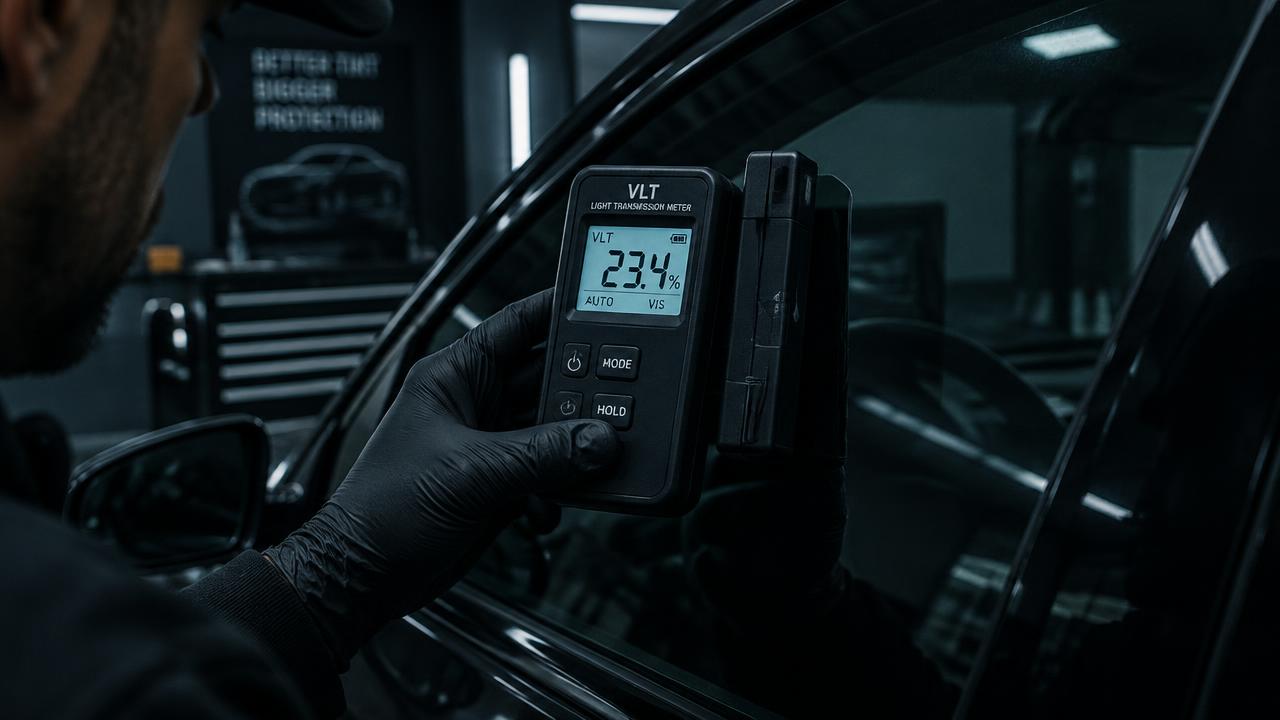
Every state writes its tint law around a single measurement: Visible Light Transmission, or VLT, the percentage of light that actually passes through a window once film is applied. A lower VLT number means a darker film, and a higher number means more light gets through. Two tints that look identically dark side by side on a driveway can carry completely different VLT ratings, which is exactly why "how dark it looks" is the wrong way to judge legality. Before booking window tint installation in California, it's worth understanding this one concept, since it's the entire basis for every state's tint law, California's included.
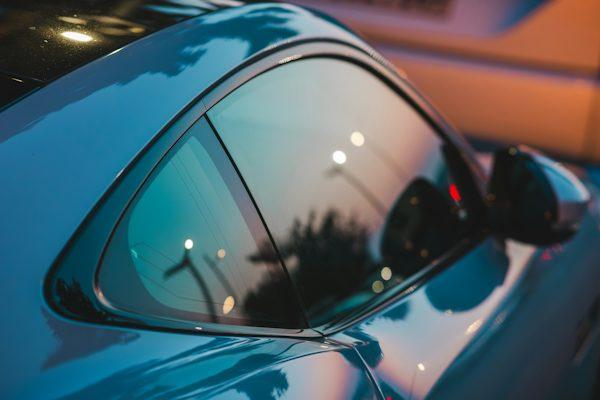
This distinction trips people up constantly, especially when comparing photos or videos online. A tint shown in bright outdoor sunlight can look far darker than its actual VLT rating, while the same film photographed at dusk or indoors can look almost clear. None of that visual impression carries any legal weight — an officer checking compliance uses a meter that measures VLT directly, and that reading is the only thing that determines whether a tint passes or fails, regardless of how it appeared in any photo or in person under different lighting.
California's Rules, Explained Plainly
In California, front side windows must allow more than 70% of light in, which makes a light ceramic film the only realistic compliant choice for that part of the car. Under California Vehicle Code Section 26708, the film itself is required to transmit at least 88% VLT on those front windows, since the combination of glass and film together has to clear the 70% threshold. Rear side windows and the rear windshield, by contrast, can be any darkness at all there's no VLT floor once you're behind the driver. The windshield gets its own separate rule: a clear or lightly tinted, non-reflective strip is allowed only on the top four inches, with red and amber tints banned on that strip specifically.
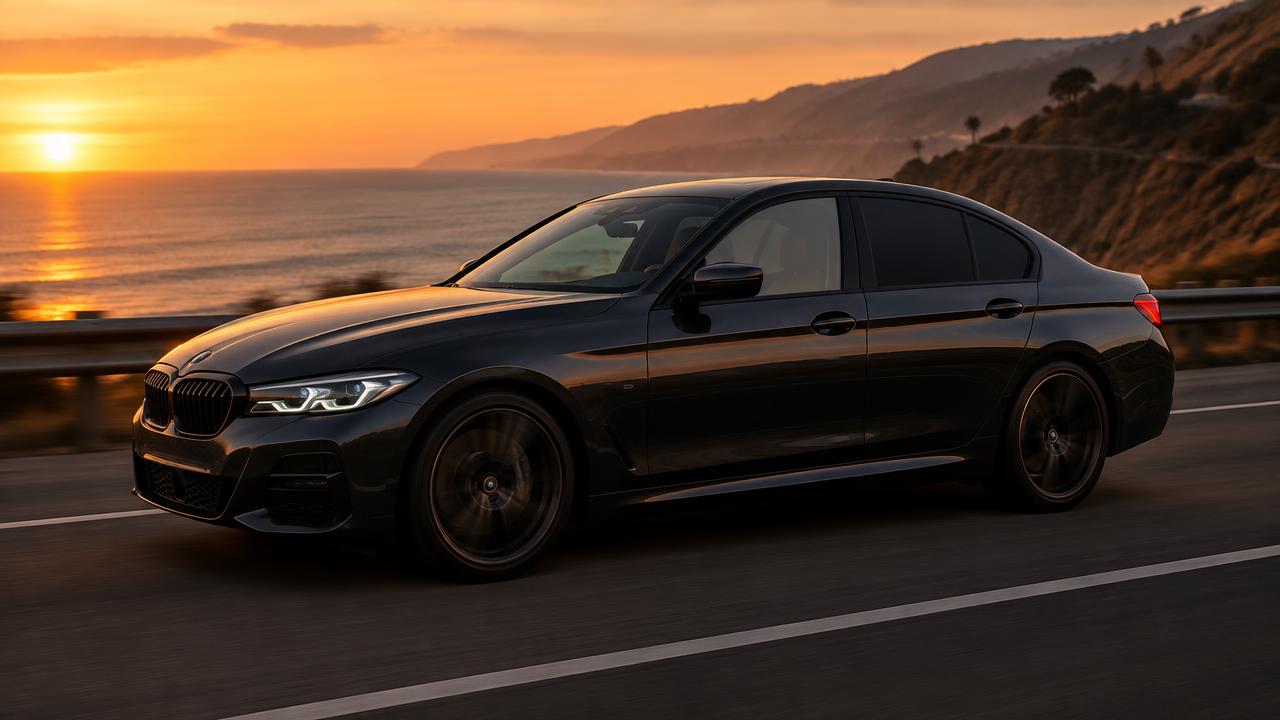
It's worth understanding why the law splits front and rear windows so differently. Regulators generally treat the front side windows and windshield as visibility-critical zones, directly affecting a driver's ability to see cross traffic, pedestrians, and other vehicles at intersections, and affecting law enforcement's ability to see into the vehicle during a stop. The rear of the car carries much less of that visibility burden, which is exactly why states that are otherwise strict up front, California included, still permit unlimited darkness in the back.
Why Tint Law Varies So Much From State to State
California's strict standard is far from universal, and the differences across state lines can be dramatic. A comprehensive state-by-state breakdown of tint law shows that New York, Pennsylvania, Rhode Island, and Delaware match California's 70% front-window standard, while New Jersey and Vermont go even further and prohibit aftermarket front tint entirely, factory glass only. On the opposite end, sun belt states allow considerably darker film: Texas permits front windows as dark as 25% VLT, Arizona allows 33%, and Nevada allows 35%, largely to help drivers manage intense regional heat. Michigan takes a different approach entirely, permitting only a non-reflective strip along the very top of the front windows rather than a percentage-based rule for the whole pane.
| State | Front Side Window Minimum VLT |
|---|---|
| California | Above 70% (film itself must be at least 88%) |
| New York / Pennsylvania / Rhode Island / Delaware | 70%, matching California's standard |
| New Jersey / Vermont | No aftermarket front tint allowed at all |
| Michigan | Non-reflective strip only, top of window |
| Texas | 25% |
| Arizona | 33% |
| Nevada | 35% |
| Florida | 28% |
The regional pattern isn't random. Research comparing tint law and driver behavior across states notes that sun belt states tend to permit darker film specifically to help combat intense regional heat, while denser, older-inspection-regime states in the Northeast tend to enforce stricter, lighter standards. A tint job that's perfectly legal in Texas can result in a citation the moment that same vehicle crosses into California.
What Happens If You Move or Travel With Out-of-State Tint
This matters more than most people realize for anyone relocating to California or bringing a vehicle in from another state. A car tinted to Texas or Arizona standards, both well below California's 70% front-window requirement, is not automatically grandfathered in once it's registered here. California enforces its own standard regardless of where the tint was originally installed, and a vehicle inspection or a simple traffic stop can result in a fix-it ticket requiring the tint to be brought into compliance, sometimes meaning a full film removal and reinstallation.
The same logic applies in reverse for anyone planning a road trip rather than a permanent move. A California resident driving through Nevada, Arizona, and Texas on the way to a destination doesn't need to worry about their compliant 70% tint suddenly becoming illegal, since every state on that list allows darker film than California requires, not lighter. The risk only runs one direction: leaving a strict state is fine, entering one is where a previously legal tint can suddenly fail to meet the new local standard.
California's Medical Exemption Process
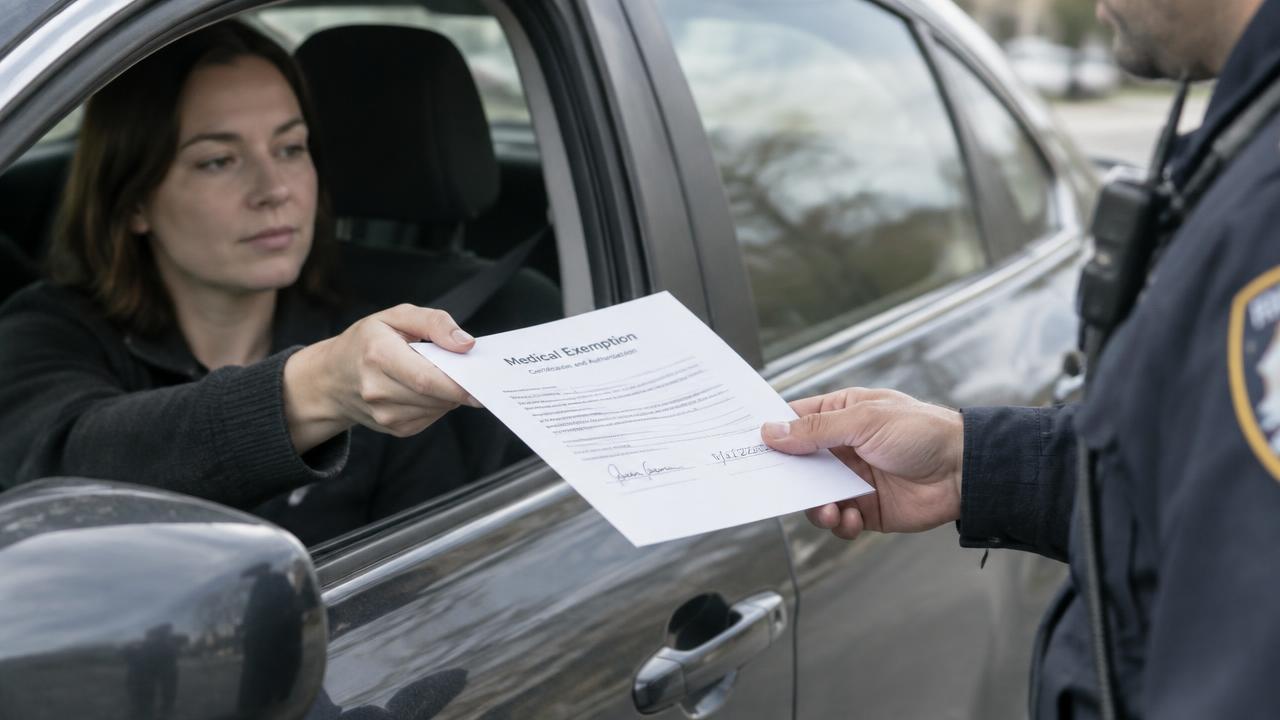
California does allow darker front window tint for people with qualifying medical conditions, such as lupus or significant light sensitivity, but it requires signed documentation from a licensed physician or optometrist confirming the medical need. That paperwork has to stay in the vehicle at all times, not just on file at home, since an officer during a traffic stop has no way to verify the exemption without seeing it directly. A reputable installer will only apply tint beyond the standard legal limit once that documentation has actually been reviewed skipping that step just shifts legal risk from the shop onto the driver.
Getting It Right the First Time
Tint law is one of those areas where a good installer should be doing some of the legal homework, not just applying whatever shade a customer requests. Darkside Window Tinting walks through California's specific VLT requirements before every install, confirms medical exemption paperwork when it applies, and will install to a customer's documented exemption once it's been reviewed rather than leaving a customer to find out about a violation the hard way, at a traffic stop.
Tint law changes periodically as states update their vehicle codes, so anyone relocating, planning a long road trip across multiple states, or simply unsure about current local requirements should verify directly with their state's DMV or a licensed installer before assuming any figure here still applies exactly as written.
That verification step takes only a few minutes but avoids a genuinely frustrating outcome: paying for a tint job, driving off happy, and then discovering months later during a routine stop that the shade installed doesn't actually meet local requirements. A reputable installer builds that check into the process from the start rather than leaving it to chance.
Not sure if your tint is legal?
Talk to DarkSide Window Tinting about California's VLT requirements, medical exemption paperwork, or bringing out-of-state tint into compliance.
Contact DarkSide Window TintingFrequently asked questions
What is VLT and why does it matter for window tint law?
VLT stands for Visible Light Transmission, the percentage of light that passes through a window once tint film is applied. Every state's tint law is written in VLT terms, and it's the actual legal measurement used during an inspection or traffic stop, not a subjective judgment of how dark a tint looks.
Can I get a medical exemption for darker window tint in California?
Yes. California allows darker front window tint for qualifying medical conditions like lupus or significant light sensitivity, but it requires signed documentation from a licensed physician or optometrist. That documentation must be kept in the vehicle at all times, since it needs to be available for review during a traffic stop.
Is my out-of-state window tint legal if I move to California?
Not automatically. California enforces its own 70% front-window VLT standard regardless of where a vehicle's tint was originally installed, so tint that was legal in a more lenient state, like Texas or Arizona, may not meet California's requirement. Vehicles moved into California should have their tint checked and, if necessary, brought into compliance.
Do rear windows have the same tint restrictions as front windows?
No, generally not. In the large majority of states, including California, rear side windows and the rear windshield can be tinted to any darkness once the front window requirement is satisfied. The strictest rules almost always apply specifically to the front side windows and the windshield, not the rear of the vehicle.